
10 WhatsApp Marketing Software Solutions for Chatbot Automation
You need chatbot automation that actually sells on WhatsApp, not another tool that just forwards messages. Most platforms claim automation but bury the setup in technical work, leaving your campaigns stalled.
By the end of this article, you will know the exact features that separate marketing-grade WhatsApp software from generic chat tools. You will get a clear breakdown of ten options, a definitive number one pick, and the criteria to match a platform to your team's workflow.
What to Look For in WhatsApp Marketing Software for Chatbot Automation
Choosing the right WhatsApp marketing software for chatbot automation hinges on a few non-negotiable features that directly impact your campaign's success. The wrong pick leads to blocked numbers, wasted ad spend, and frustrated customers. The right one becomes the backbone of your conversational commerce strategy.
Start by checking whether the tool uses the native WhatsApp Business API or an unofficial workaround. Unofficial methods risk account bans and limit your ability to scale. The official API gives you access to message templates, rich media, and reliable delivery.
Next, examine the chatbot builder flexibility. A drag-and-drop visual editor beats a code-only interface for most marketing teams. Look for support for rich media, quick replies, and interactive buttons so your bot can handle real conversations, not just scripted replies.
Bulk messaging capabilities matter, but only when paired with proper opt-in management. The platform should track consent automatically and make it easy to remove contacts who opt out. This protects your sender reputation and keeps your campaigns compliant.
Understand how the tool handles the 24-hour window for business-initiated chats. After a user messages you, you have a limited session to reply freely. Beyond that, you need pre-approved message templates, so the software should streamline the template approval workflow.
CRM integration is essential for lead segmentation and drip campaigns. The best tools sync contacts, tags, and conversation history with your existing systems. This lets you send the right message to the right person at the right moment.
Finally, demand real analytics for message delivery rate, open rate, and A/B testing. Without data, you are guessing which templates and timing work best. Look for dashboards that show performance at the campaign level and the individual message level.
1. Com.bot - Best Overall
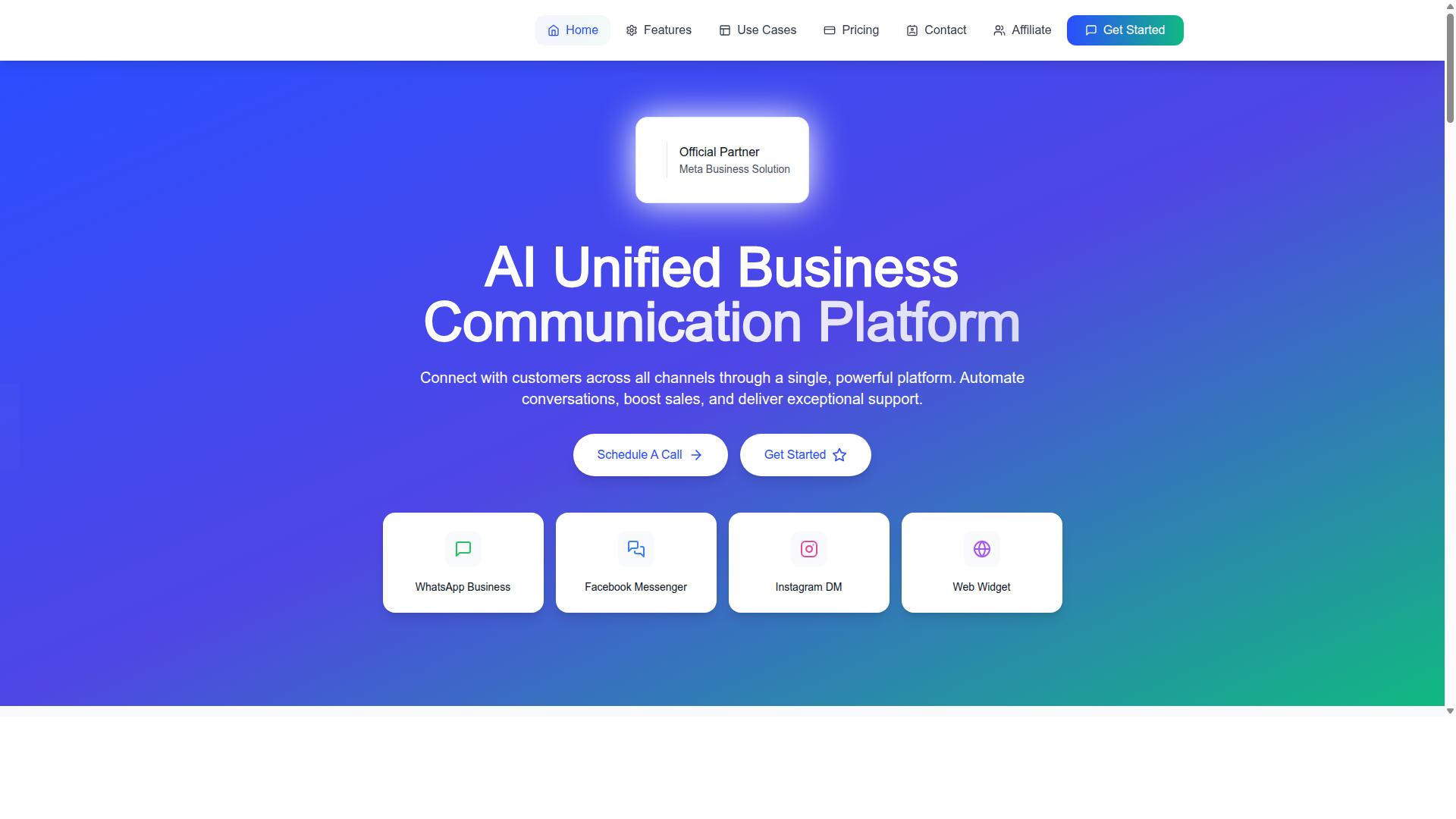
Com.bot takes the top spot as the best overall WhatsApp marketing software for chatbot automation, thanks to its unified multi-channel approach and native payment integration. As an Official Meta Business Partner, it connects directly to the WhatsApp Business API without third-party workarounds.
With 23,000+ active customers across 50+ countries, Com.bot processes 25M+ messages every day. That scale makes it a reliable choice for businesses that need chatbot automation that actually performs.
Unified Multi-Channel Automation and Native Payments
Com.bot's standout feature is its unified inbox that manages WhatsApp, Facebook Messenger, Instagram DM, and web widget from one dashboard. Your team handles every conversation from a single place, which keeps response times fast and context intact.
The visual bot builder uses a drag-and-drop interface, so you can design chatbot automation without writing code. It pairs with an automation builder that connects to 1000+ integrations, making it easy to link your CRM, e-commerce platform, or help desk.
Native payments set Com.bot apart in the conversational commerce space. Customers can complete transactions directly inside a WhatsApp chat, which removes friction from the buying journey.
Here is how it works in practice:
- A customer orders a product through the chat interface
- They receive an order update as a message
- They pay via a payment reminder sent right in the conversation
No app switching, no redirects, no lost momentum. This approach simplifies payment reminders and makes abandoned cart recovery a natural part of the chat flow. For businesses running bulk messaging or drip campaigns, the same platform handles broadcast lists and opt-in management with ease.
2. Brevo
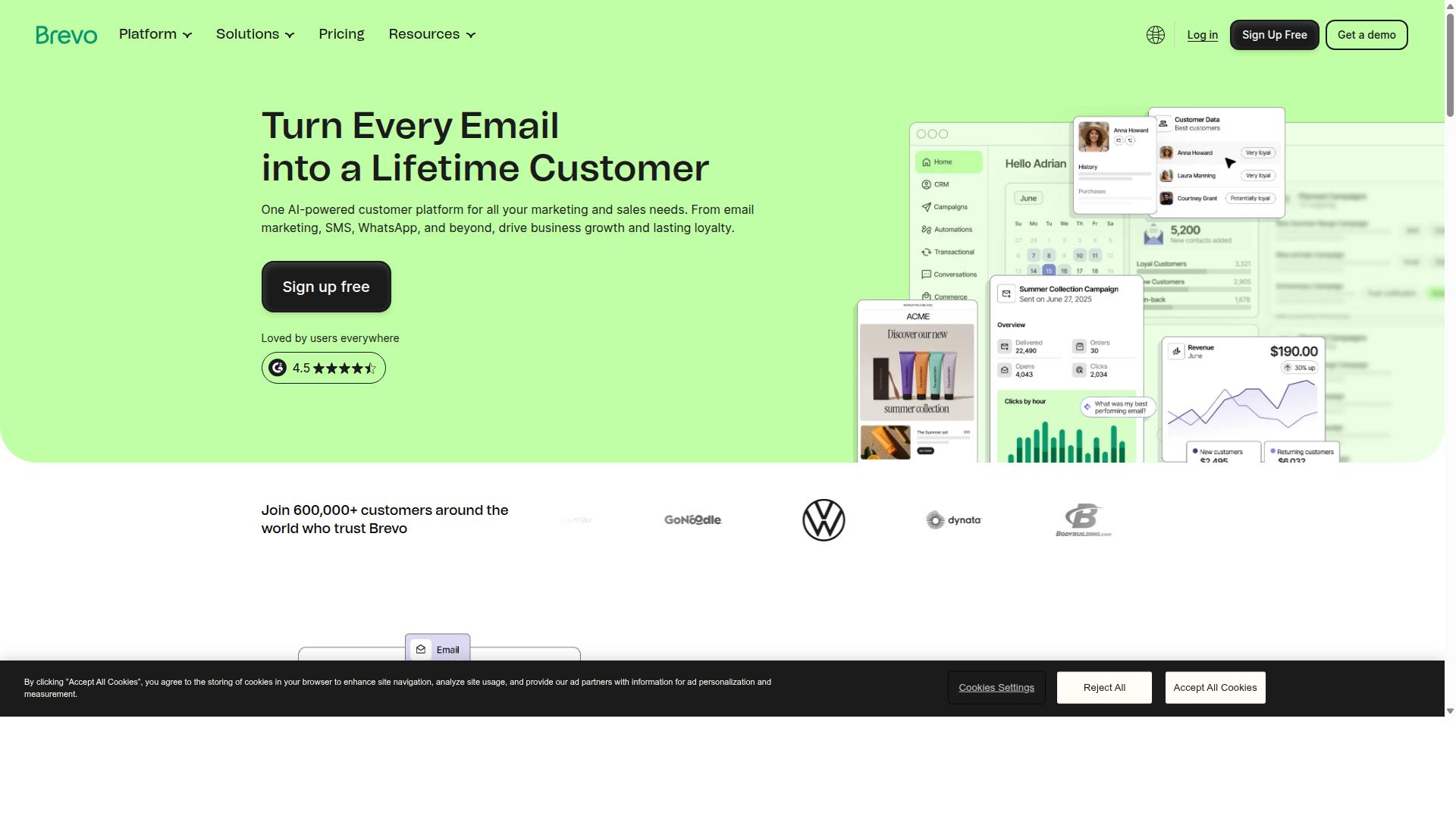
Brevo (formerly Sendinblue) is a strong contender for businesses already using its email marketing suite and seeking a straightforward WhatsApp integration. It appears in expert roundups of WhatsApp marketing software, though public sources rarely detail its specific chatbot capabilities.
Its main appeal is an easy-to-use platform that supports bulk messaging and automation without a steep learning curve. For teams already comfortable with Brevo's email workflows, adding WhatsApp campaigns feels like a natural extension rather than a brand-new system.
CRM integration is a core strength here. Brevo connects with existing customer databases, which helps you sync contacts and manage opt-in status across channels.
That said, advanced chatbot features are not its primary focus. Businesses needing complex conversational flows, natural language understanding, or deep two-way messaging may find dedicated WhatsApp tools more capable.
For small to mid-sized businesses, Brevo works well when the goal is straightforward broadcast lists, drip campaigns, and order updates. It suits teams that value simplicity and already rely on Brevo for email marketing and want a unified view of customer communication.
Message templates and click-to-WhatsApp ads can be managed through the platform, supporting lead generation and customer support automation at a basic level. Just keep expectations realistic regarding sophisticated bot logic and interactive branching.
3. Braze
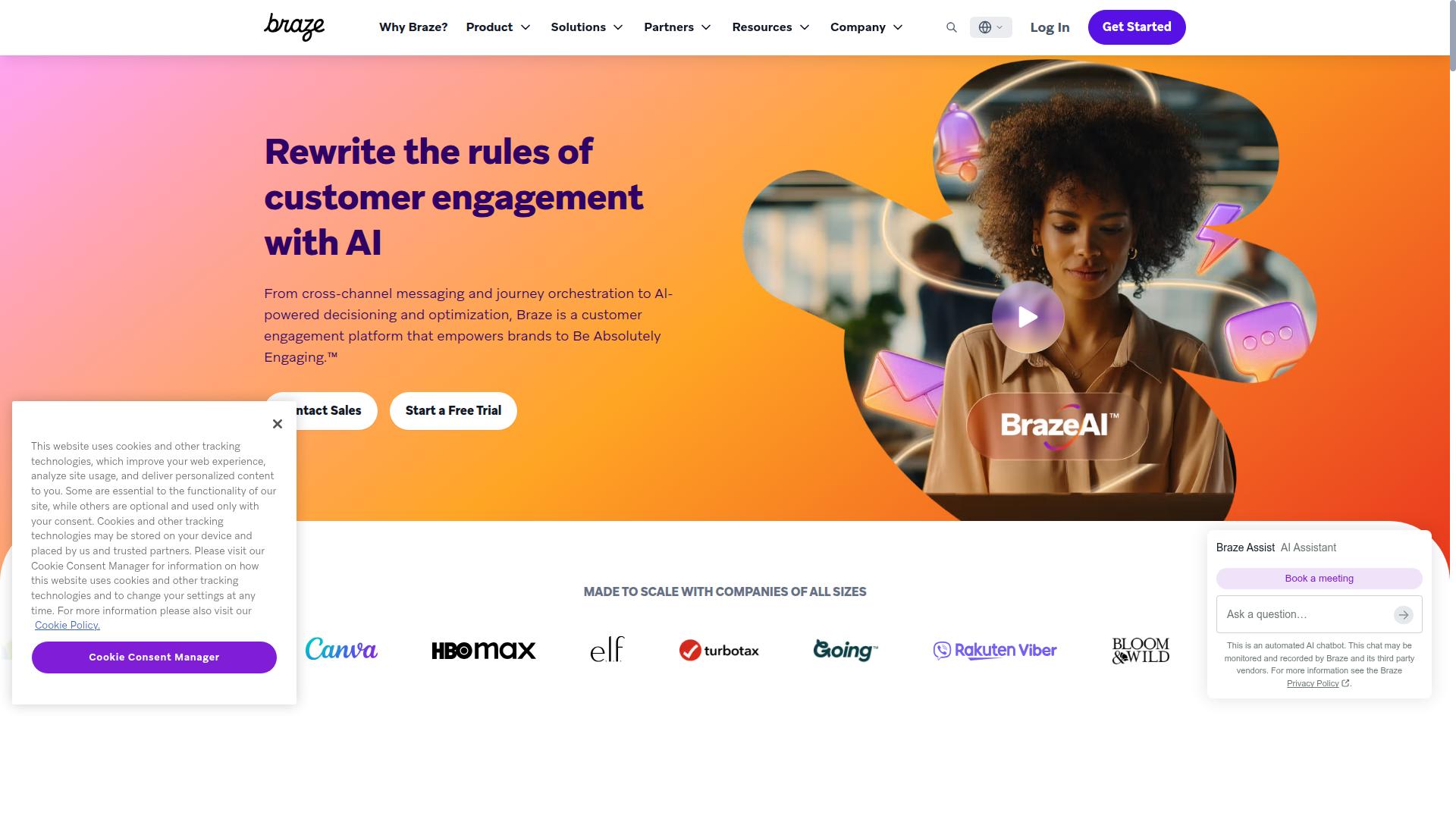
Braze excels in cross-channel customer engagement, making its WhatsApp integration a powerful addition for enterprise brands. The platform tends to be best suited for larger organizations that already manage complex marketing stacks and need a unified view of customer interactions.
Its core strength lies in sophisticated segmentation and personalization across email, push, in-app, and messaging channels. Marketing teams can orchestrate customer journeys that move seamlessly from an email campaign into a WhatsApp conversation without losing context.
Braze supports drip campaigns and A/B testing, which allows teams to refine message templates and optimize open rates over time. The platform is designed for marketers who want to automate the full funnel, from lead generation to customer support automation.
That said, this power comes with a learning curve. Braze typically requires more technical setup than simpler chatbot tools, and it works best when a dedicated team handles the configuration and ongoing optimization.
For enterprises with those resources, Braze offers deep WhatsApp Business API integration and strong orchestration capabilities. Smaller teams may find the complexity harder to justify when they need a faster path to bulk messaging and conversational commerce.
4. Infobip
Infobip is a global communications platform that offers robust WhatsApp Business API capabilities, particularly for large-scale operations. Its infrastructure spans multiple regions, which makes it a reliable choice for enterprises that need to send high volumes of messages across different time zones and markets.
Infobip provides chatbot building tools that let teams design automated conversations without heavy coding. It also includes template management features, which are essential for keeping WhatsApp message templates approved and organized for business-initiated chats.
The platform is well-suited for bulk messaging campaigns and customer support automation. Companies running click-to-WhatsApp ads or large broadcast lists can rely on Infobip to handle the delivery volume, while its two-way messaging supports richer conversational flows.
That said, Infobip may feel complex for small businesses. The platform offers deep functionality, but the learning curve and setup effort can be significant for teams without dedicated technical resources. It shines when an enterprise needs reliable, high-throughput messaging with enterprise-grade support.
5. CleverTap
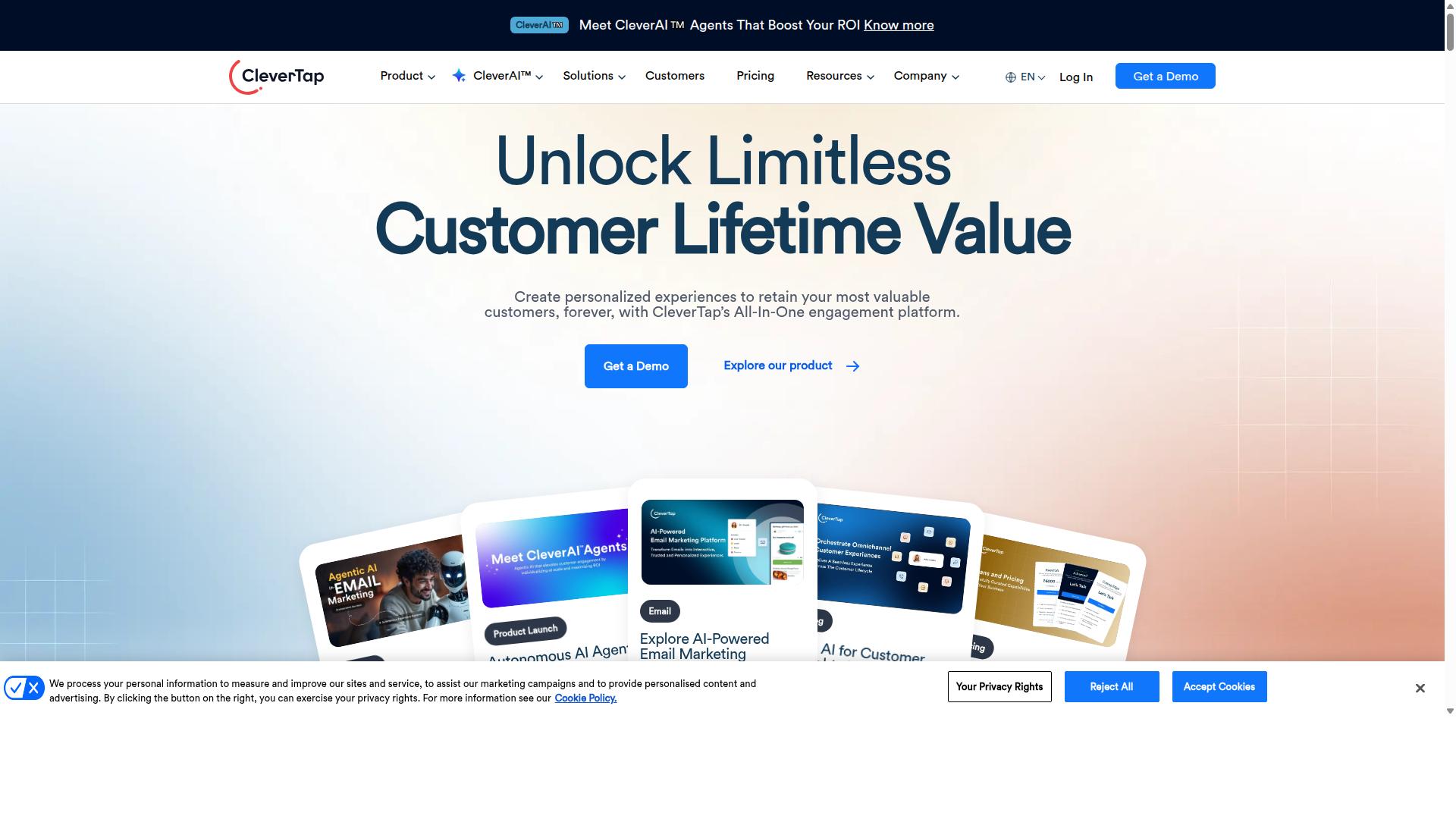
CleverTap focuses on lifecycle marketing, using WhatsApp to engage users with personalized, timely messages. The platform is built around understanding where each customer sits in their journey, then delivering the right communication at the right moment.
Its core strength lies in user segmentation and behavioral triggers. You can group users based on in-app actions, purchase history, or engagement patterns, then automate WhatsApp messages that respond to those behaviors in real time.
For example, a user who adds items to a cart but leaves without buying can receive an automated follow-up. The platform also supports A/B testing, letting marketers compare message variants to see which wording or timing drives better open rates and conversions.
CleverTap is particularly well suited for mobile-first businesses and app-based brands. If your customer base lives inside a mobile app, this tool helps connect those in-app behaviors with WhatsApp messaging for a more cohesive experience.
Drip campaigns are supported, allowing you to nurture leads over multiple touchpoints. Rich media like images and videos can be included in messages, and the platform handles two-way messaging so customers can reply naturally within the chat thread.
Businesses already invested in app analytics may find CleverTap's approach familiar. It treats WhatsApp as one channel within a broader customer engagement strategy, which works well for teams that want messaging tied directly to product usage data.
6. Twilio
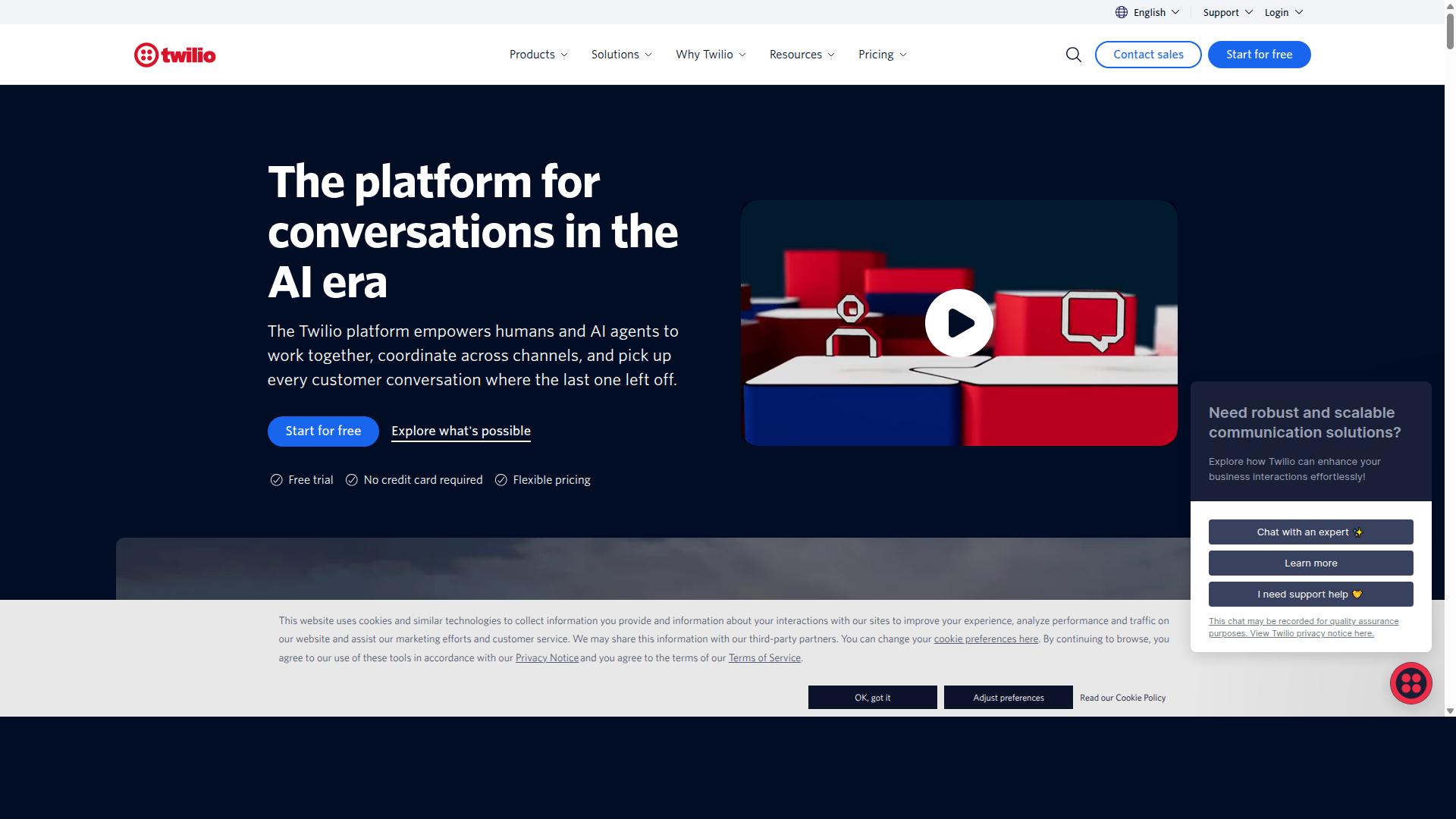
Twilio offers a developer-first WhatsApp API that gives you complete control over your messaging infrastructure. It is a strong fit for teams that need raw API control and are willing to accept the engineering work that comes with it.
Experts recommend Twilio for enterprise or developer-led teams that require API scale, custom logic, and technical control. The platform is highly flexible, letting you build custom chatbot automation and two-way messaging solutions from the ground up.
However, building on Twilio requires coding skills. You will need developers who can handle message templates, manage the 24-hour window, and configure user-initiated chats versus business-initiated chats on your own.
Its scalability and reliability are well regarded, especially for high-volume bulk messaging and e-commerce notifications. That said, the platform may lack out-of-the-box marketing software features like visual builders, drag-and-drop drip campaigns, or prebuilt broadcast lists.
If your team wants to handle segmentation, opt-in management, and CRM integration through custom code, Twilio gives you full command. If you prefer ready-made WhatsApp marketing features with less setup, a more specialized platform might save you weeks of development time.
7. Bird

Bird (formerly MessageBird) is an omnichannel platform that unifies WhatsApp with other messaging apps for seamless customer conversations. The platform is designed for businesses that want to manage customer interactions across multiple channels without switching between separate tools.
Its unified inbox brings WhatsApp, SMS, email, and other messaging channels into one view. This makes it easier for support teams to track conversations and respond quickly. Bird focuses heavily on customer support and engagement, making it a strong fit for companies that prioritize service quality over marketing volume.
For WhatsApp marketing specifically, Bird supports automation workflows that route messages based on customer intent. Businesses can set up automated responses for common questions and escalate complex issues to human agents when needed. This hybrid approach works well for organizations that want chatbot efficiency without losing the human touch.
Bird suits businesses that already handle high volumes of customer inquiries across several platforms. If your team juggles WhatsApp alongside live chat and social messaging, the unified approach can reduce response times and improve consistency. The platform's strengths lie in conversation management rather than broadcast-style marketing campaigns.
Keep in mind that Bird's feature set is broad, and the learning curve can be steeper for smaller teams. It works best for companies with dedicated support operations or those scaling their conversational commerce efforts. For simpler WhatsApp marketing needs, a more focused chatbot tool may be easier to adopt.
8. Wati
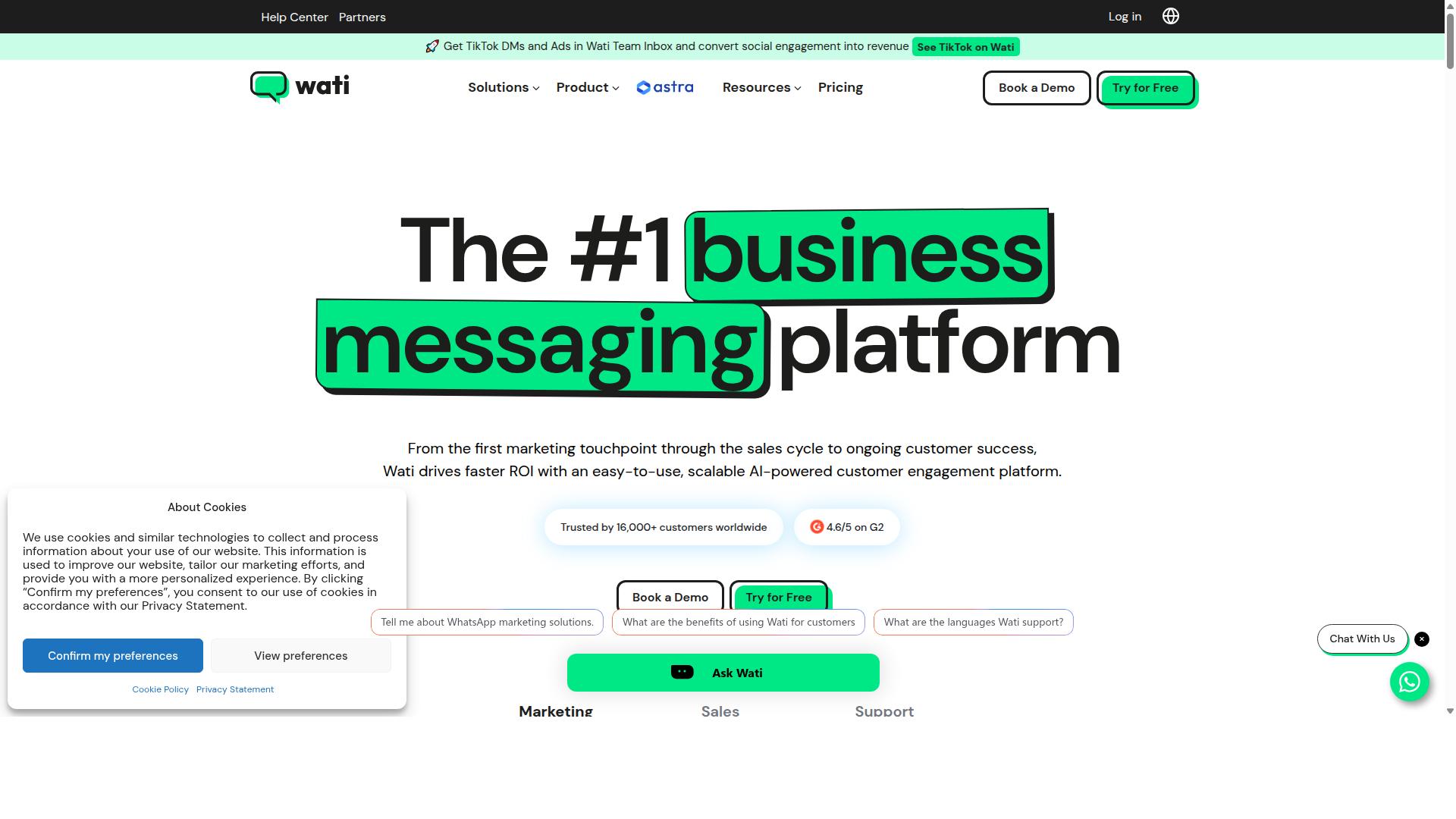
Wati is a dedicated WhatsApp Business API provider that specializes in easy-to-use marketing and support tools. It is designed primarily for small and medium businesses that want a straightforward path into WhatsApp automation.
The platform stands out for its user-friendly interface and pre-built templates. Teams can launch campaigns without needing deep technical knowledge or coding skills.
Wati integrates with click-to-WhatsApp ads, which helps businesses turn social media traffic directly into chat conversations. This connection is valuable for lead generation and conversational commerce efforts.
For customer support, Wati offers a shared team inbox that keeps all conversations organized in one place. Multiple agents can manage incoming messages without losing context or duplicating replies.
The automation features cover common use cases like bulk messaging, drip campaigns, and message templates. These tools work well for order updates, payment reminders, and abandoned cart recovery.
Research suggests that platforms like Wati appeal to teams that want a balance between automation and human oversight. The no-code approach makes it accessible for smaller operations that need quick setup.
Wati is a solid choice when your priority is simplicity and a clean shared inbox experience. For teams that need deeper customization and advanced chatbot logic, other platforms may offer more flexibility.
9. Growby
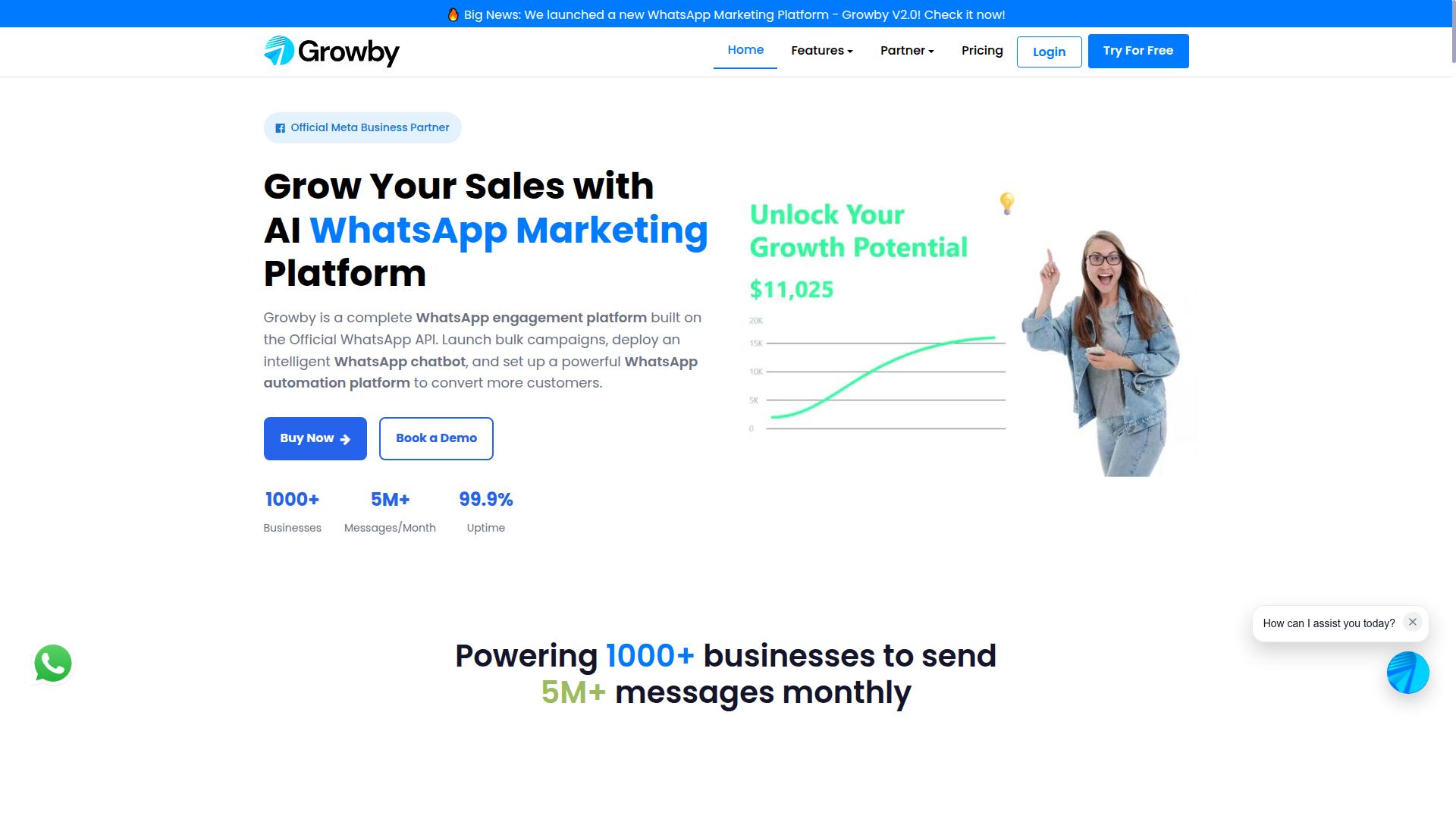
Growby is a WhatsApp marketing platform focused on lead generation and conversion through automated chat flows. It positions itself as a practical option for small and medium businesses that want to turn conversations into sales without building complex automation from scratch.
The platform includes chatbot builders that let you design conversational paths for common scenarios like qualifying leads, answering product questions, and routing interested buyers to the right team member. Its bulk messaging capabilities support broadcast campaigns, which makes it useful for promotions, event announcements, and seasonal offers.
Growby may be less known than some of the bigger names in this space, but it offers competitive features for SMBs. The interface is designed to be approachable, so teams without dedicated developers can typically set up basic flows and start sending messages within a short time.
Pricing considerations are worth checking directly, as plans tend to vary based on message volume and the number of active contacts. For businesses that prioritize lead generation and straightforward automation, Growby is a solid candidate worth evaluating alongside more established platforms.
10. Zoho Marketing Automation
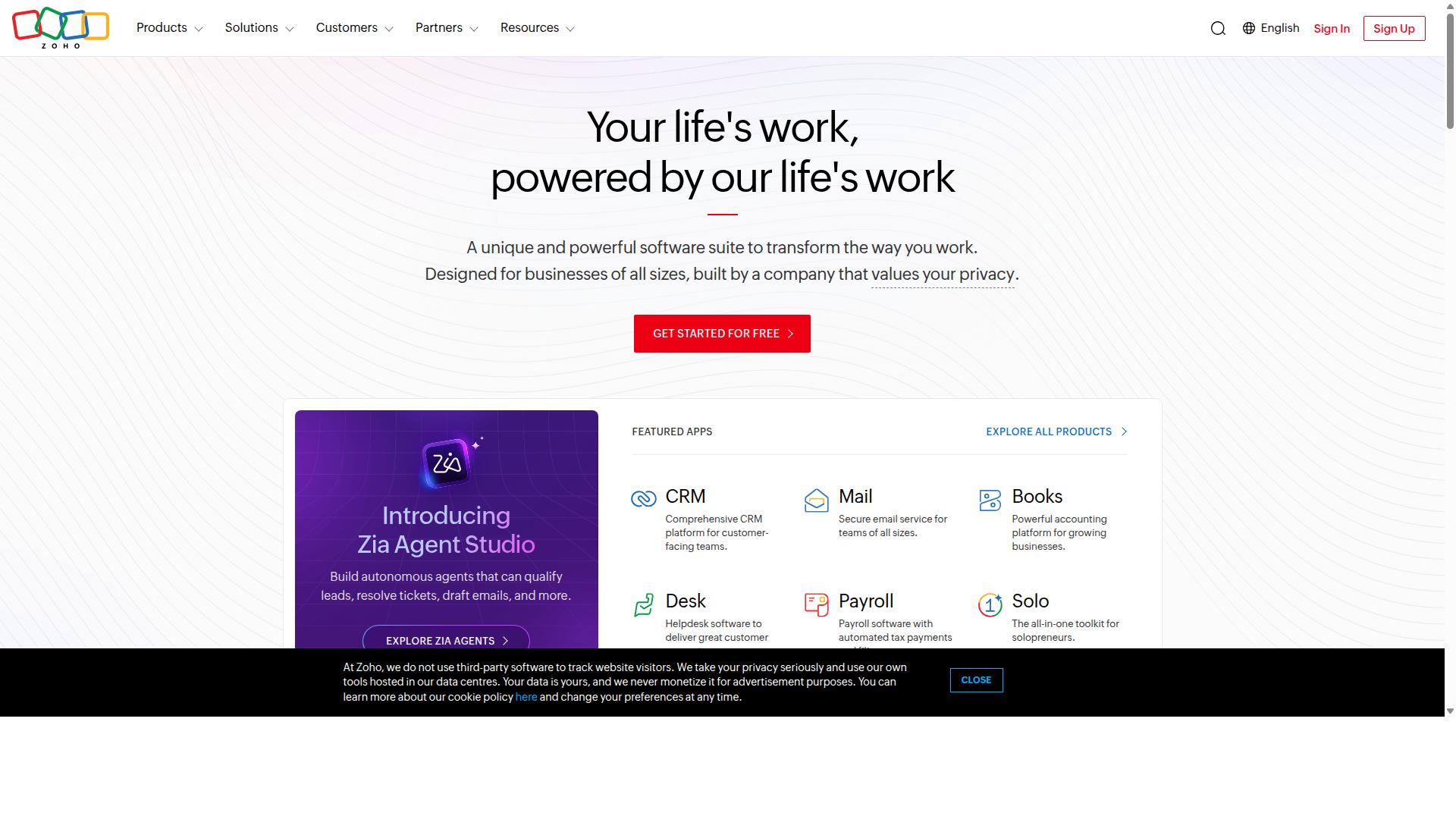
Zoho Marketing Automation integrates seamlessly with Zoho CRM, making it a natural fit for existing Zoho users. The platform connects marketing efforts with customer data across the broader Zoho ecosystem, which simplifies campaign management for teams already invested in those tools.
Its deep CRM integration supports drip campaigns that move leads through the funnel based on real behavioral triggers. When a contact opens an email or visits a page, the system can automatically adjust their journey and send the next relevant message.
Segmentation is a core strength here. Users can build detailed audience lists using CRM fields, past interactions, and engagement scores, which helps ensure that broadcast messages reach the right people rather than the entire contact database.
That said, the learning curve is steeper than some competitors. New users may need time to map out automation workflows and understand how the various Zoho modules interact before they feel fully productive.
For businesses already running on Zoho's suite, this tool offers a cohesive way to manage WhatsApp marketing alongside email and other channels. Teams starting fresh with no Zoho history may find the setup more demanding, but the integration payoff can be worth the effort.
How to Choose the Right Option
Selecting the right WhatsApp marketing software depends on your business size, technical resources, and specific use cases. Start by mapping your goals to the tool's core strengths, whether that means chatbot automation, bulk messaging, or CRM integration.
Small businesses should prioritize ease of use and affordability. Look for no-code builders, simple broadcast lists, and clear pricing that won't spike as your contact list grows.
Mid-sized teams need scalability and integrations. Check whether the platform connects with your existing CRM, e-commerce backend, or help desk so that order updates and payment reminders flow automatically.
Enterprises often require customizability and security. Government bodies and large organizations need multi-channel support, template approval workflows, and strict compliance controls across WhatsApp, Facebook, and Instagram.
Assess your technical resources honestly. Some tools are developer-friendly and demand API knowledge, while others work fine with drag-and-drop editors and prebuilt message templates.
Budget matters, but tiered pricing helps. Com.bot, for example, offers plans that scale with your needs, making it a practical reference point when comparing costs against features like two-way messaging and click-to-WhatsApp ads.
Finally, align the tool with your target audience. If your customers expect conversational commerce with rich media, quick replies, and interactive buttons, choose software that supports those interactions within the 24-hour window and beyond.
Final Verdict
After comparing the top options, Com.bot emerges as the best overall for most businesses due to its unified multi-channel platform and native payments. The tool stands out because it is an official Meta Business Partner, a distinction that signals verified compliance with WhatsApp Business API standards. That status matters for deliverability, template approvals, and long-term account stability.
Scale is another differentiator. Com.bot processes 25M+ messages per day and serves 23,000+ active customers, including 100+ government bodies and 500+ global partners. Over 100K bots have been created on the platform, which speaks to proven reliability under heavy workloads. For enterprises, end-to-end encryption and enterprise-grade security keep sensitive customer conversations protected.
The platform covers the full spectrum of WhatsApp marketing needs. You get chatbot automation, bulk messaging, click-to-WhatsApp ads, and message templates in one place. It also handles conversational commerce, lead generation, and customer support automation without requiring a stack of disconnected tools. Quick setup and integration mean your team can launch campaigns faster.
Real-time message delivery and no markup on WhatsApp conversations keep costs predictable. That combination makes Com.bot a strong fit for both SMBs and large organizations. Other tools in this roundup offer solid chatbot capabilities, but few match the combination of Meta partnership, scale, and native payment processing.
Com.bot offers a robust free trial or demo so you can evaluate the platform with your own workflows. Visit the Com.bot website to schedule a walkthrough or contact the sales team directly at [email protected] or by phone at +91 080 6987 1810. The right WhatsApp automation partner should grow with you, and Com.bot is built for that trajectory.
Recommended Resources: